

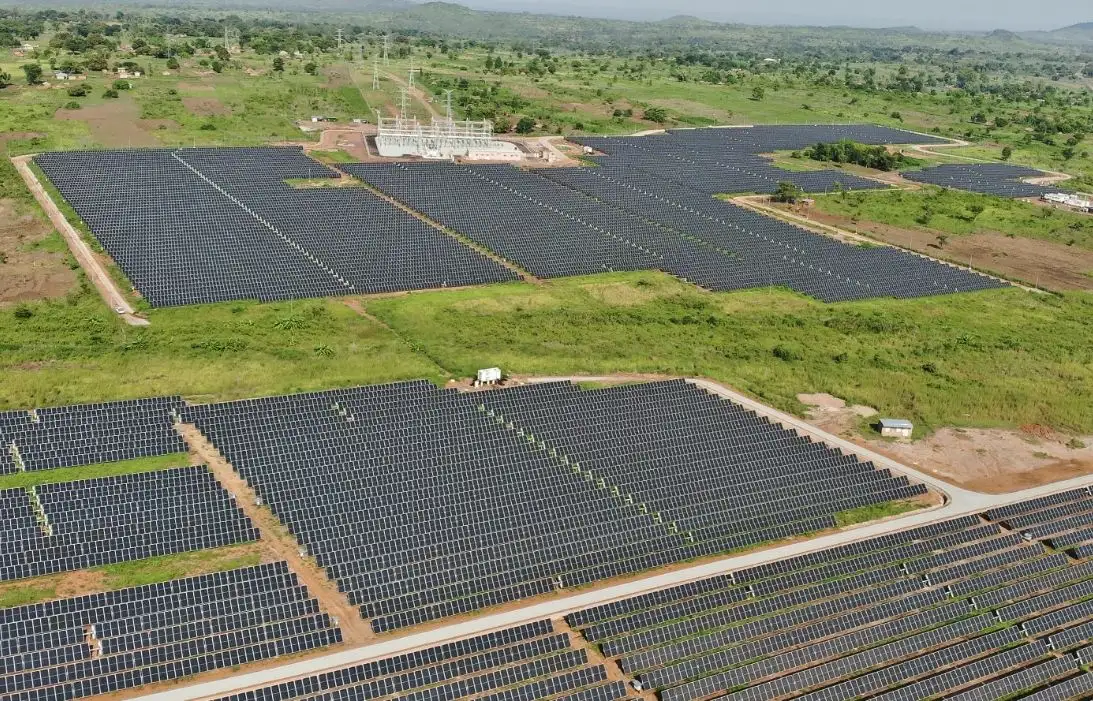
This summer, Nextpower delivered its first project in Uganda. For Nextpower team, the project demonstrates what it takes to execute a utility-scale solar project in a new operating environment: proven technology, strong local expertise, and teams that solve problems together.
But this story is bigger than entering a new market. The 24 MWp Ituka West Nile solar project represents an important step in advancing new renewable power generation across East Africa, a region where reliable electricity can support homes, businesses, and economic growth.
Located about 450 kilometres from Kampala, near Arua, the Ituka West Nile project combines a utility-scale solar plant with a new high-voltage grid connection. The project secured $19 million in project financing from the Emerging Africa Infrastructure Fund during COP28, following a power purchase agreement with the Uganda Electricity Transmission Company in September 2023.
AMEA Power is the developer, owner and operator behind the project. Headquartered in Dubai, the company develops renewable-energy projects across Africa, the Middle East and emerging Asia. In Uganda, the project is being implemented through Ituka West Nile Uganda Limited, a Ugandan project company fully owned by AMEA Power. This long-term ownership model means the company’s role extends beyond development and construction to the plant’s operation and its contribution to Uganda’s energy transition.
Power where growth is taking place
Operational since August 2026, the Ituka West Nile plant is expected to generate approximately 53.94 GWh of electricity each year, equivalent to the electricity needs of more than 192,640 households, while avoiding approximately 26,600 tonnes of carbon emissions annually.
For Uganda, adding renewable generation to the national grid can support rising electricity demand and the country’s broader industrial development ambitions. For the West Nile region, the project demonstrates how utility-scale solar can help expand generation capacity beyond the country’s main commercial centres and bring new renewable power closer to areas where it is needed.

Technology designed for practical execution
The Ituka West Nile project uses NX Horizon® single-axis solar trackers supporting 39,034 modules. NX Horizon’s independent row architecture provides flexibility for project design and construction planning, and its self-powered architecture eliminates the need for AC power at each tracker row, while its preassembled components are designed to simplify field installation. These features provided a strong technical foundation for the project.
“Having worked with Nextpower on site at the Ituka West Nile 20MWac project, we were impressed by how easy the NX Horizon is to set up and install. Instead of nuts and bolts, the torque tubes are joined with rivet-like fasteners that lock permanently in place, and the bearing housings are secured with simple pins and collars. The modules are mounted the same way, with swaged pins and collars, which makes module installation quick and consistent, with no risk of over or under tightening. The Nextpower site team was also very supportive in guiding the contractors on how to complete the installation to the manufacturer’s requirements. Easy to install, reliable by design, and backed by a team that truly supports its product.” — Michael Mukasa, Site Manager, Ituka West Nile project
But successful execution in a new geography also depends on close coordination among technology providers, EPC partners, and local teams across equipment delivery, installation, construction and commissioning.
That collaboration was central to our work with Danway Electrical & Mechanical Engineering throughout the project. Our teams worked closely with them from first delivery to final grid connection, coordinating material deliveries, providing technical and field support, and responding to requirements as construction progressed.
For Nextpower, the project has also provided valuable experience. It has strengthened our understanding of the requirements of delivering modern energy infrastructure in Uganda, deepened our relationships with partners on the ground, and created a foundation for future opportunities across East Africa.
A foundation for what comes next
This first 24 MWp project in Uganda demonstrates how Nextpower’s global supply chains, proven technologies, and engineering expertise can support the growth of emerging energy markets like East Africa and deliver this a new era of clean energy infrastructure.
As Africa’s energy needs continue to grow, expanding access to reliable, cleaner generation will require projects across a broader range of geographies. Our experience in Uganda gives us a strong foundation to support that growth and help deliver the next generation of clean energy infrastructure across East Africa.